 how-to
How to Know What a Comprehensive Dental Exam Includes
Last Updated: October 25, 2026
Quick Summary
A comprehensive dental exam is a full review of your mouth that covers your medical and dental history, soft tissues, gums, jaw, and every tooth, plus imaging when needed. It is longer and deeper than a routine checkup, often around 60 to 90 minutes including imaging and a cleaning. At Smiles of San Marcos, we walk every patient through each step so nothing feels like a mystery.
- A routine checkup is shorter, often 30 to 45 minutes, and focuses on cleaning and spotting obvious problems.
- An oral cancer screening is a visual and tactile check of soft tissues that takes only a few minutes.
- A periodontal assessment measures the pockets around each tooth and checks for bleeding and gum recession.
- X-rays are taken when they answer a real question, not automatically at every visit.
- Ask for a written treatment plan that lists each procedure, its estimated cost, and expected insurance coverage.
Table of Contents
- What Does a Dental Exam Include: The Full Picture
- Step 1: Reviewing Your Medical and Dental History
- Step 2: The Extraoral and Intraoral Examination
- Step 3: Tooth-by-Tooth Evaluation and Gum Health Assessment
- Dental X-Rays During Exam: When Imaging Is Needed
- How Long Does a Dental Exam Take?
- Your Dental Exam Checklist: What to Bring and Ask
- After the Exam: Prioritizing Treatment Recommendations
- Frequently Asked Questions
What Does a Dental Exam Include: The Full Picture
A comprehensive dental exam is a full head-to-toe review of your mouth, not just a quick look at your teeth.
Most people picture a checkup as a cleaning and a quick poke at the teeth. A comprehensive dental exam goes much further.
Here is what most guides get wrong: they list the steps but never explain why each one matters.
How a Comprehensive Exam Differs From a Routine Checkup
A routine checkup is a short visit focused on cleaning and spotting obvious problems. A comprehensive exam is longer and deeper. It builds a complete record of your mouth the first time, then tracks changes over time.
The table below shows the difference at a glance.
| Feature | Routine Checkup | Comprehensive Dental Exam |
|---|---|---|
| Time in chair | Shorter visit | Longer, detailed visit |
| Health history review | Brief update | Full medical and dental history |
| Soft tissue and oral cancer screen | Sometimes | Always included |
| Tooth-by-tooth charting | Focused on problem areas | Every tooth recorded |
| Gum and periodontal assessment | Basic | Full probing and charting |
| Imaging | Only if a problem shows | Based on your risk factors |
Think of the comprehensive exam as the map and the routine checkup as the regular drive. You need the map once, then you follow it.
Step 1: Reviewing Your Medical and Dental History
Your exam starts with a conversation, not a probe. We review your medical history, medications, allergies, and past dental work before anyone looks in your mouth.
This step matters more than people think. Health conditions and medications change how we plan care. Blood thinners, for example, affect treatment decisions.
We also ask about your dental history and concerns. Have you had bad experiences before? Are you nervous? What bothers you most about your teeth?
Bring a list of:
- All medications, including supplements
- Known allergies
- Past surgeries or health conditions
Step 2: The Extraoral and Intraoral Examination
Next comes the hands-on exam, inside and outside your mouth. The extraoral examination checks your jaw, neck, and face.
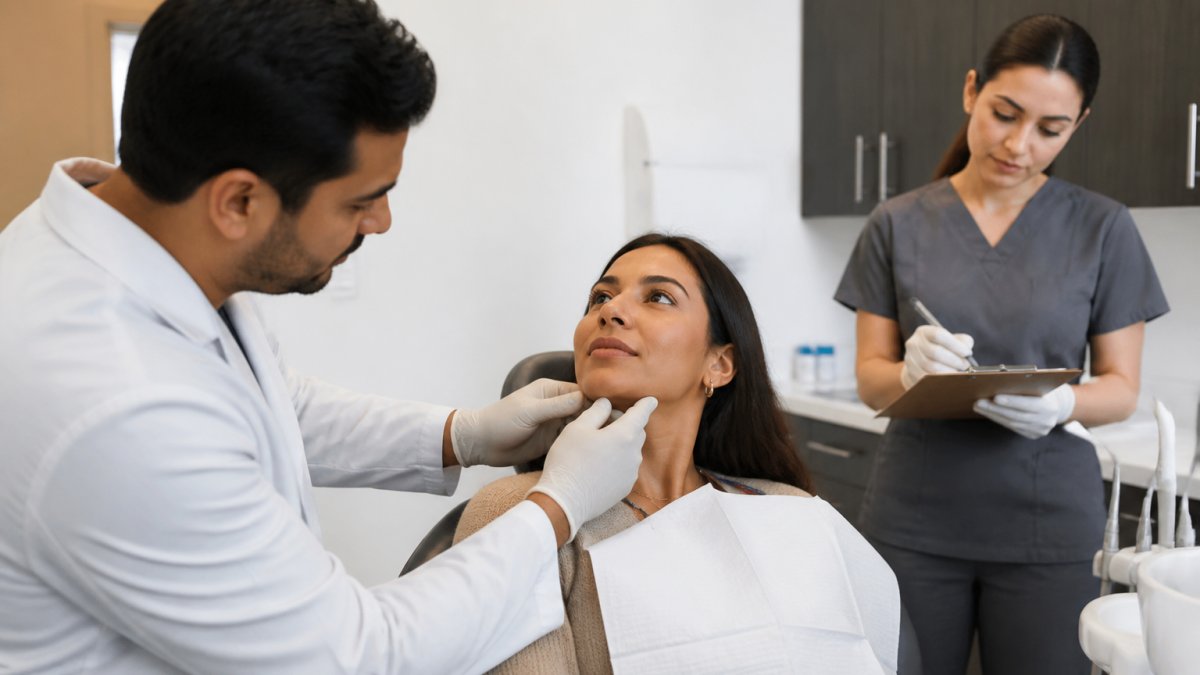
We check your jaw joints and bite for clicking, tenderness, or uneven wear. These signs can point to TMJ issues.
Inside the mouth, we examine the soft tissues: your lips, tongue, cheeks, floor of the mouth, roof of the mouth, and throat.
Oral Cancer Screening and Soft Tissue Checks
An oral cancer screening is a visual and tactile check for warning signs in the soft tissues. It takes only a few minutes and is part of every comprehensive exam we do.
We look for red or white patches, persistent sores, and unusual lumps. Risk factors include tobacco and heavy alcohol use, and the American Cancer Society's guidance on oral cavity cancer notes that these screenings help catch problems early.
This is not a diagnosis. It is a screen. If we see something that needs a closer look, we refer you to the right specialist.
Step 3: Tooth-by-Tooth Evaluation and Gum Health Assessment
Every tooth gets checked, one at a time. We examine each tooth for decay, cracks, worn fillings, and damage to existing dental work like crowns or bridges.
Gum health gets equal attention. A periodontal assessment measures the pockets around each tooth and checks for bleeding and gum recession.
Signs we watch for:
- Bleeding when we probe the gums
- Deep pockets between teeth and gums
- Receding gumlines
If you have gum disease, we explain the stage and what it means. Early gum disease is manageable with good home care and regular cleanings.
Dental X-Rays During Exam: When Imaging Is Needed
Dental X-rays are not automatic at every visit. We take imaging when it answers a real question about your oral health, and the type of image depends on what we need to see.
X-rays show what we cannot see with our eyes: decay between teeth, bone loss, infections at the root, and the position of teeth under the gums. The American Dental Association's guidance on radiographic exams ties imaging decisions to your individual risk and clinical findings, not a one-size-fits-all schedule.
The Main Types of Dental Imaging
Not every exam calls for every image. Here is how the common types differ:
| Image type | What it shows | When it is typically used |
|---|---|---|
| Bitewing | Crowns of back teeth, decay between teeth, bone height | Routine cavity checks; often yearly or on a risk-based interval |
| Periapical | One or two full teeth, root tips, surrounding bone | Suspected infection, root canal evaluation, a specific tooth with pain |
| Panoramic | Entire upper and lower jaw, sinuses, jaw joints, impacted teeth | New patient baseline, wisdom tooth evaluation, surgical planning |
| CBCT (cone beam) | 3D view of bone, roots, and airways | Implant planning, complex root canal anatomy, selected surgical cases |
A new patient exam often includes a panoramic image plus bitewings to build a baseline. A returning patient with a stable history may need only bitewings, or none if the last set is recent and nothing has changed.
How Often Are X-Rays Really Needed?
There is no universal calendar. The ADA's guidance ties frequency to your caries risk, periodontal status, age, and any changes in symptoms. A common pattern in practice:
- Low risk, no symptoms: bitewings at longer intervals, often every 12 to 24 months.
- Higher risk (recent cavities, dry mouth, frequent gum disease): shorter intervals, sometimes every 6 to 12 months.
- New patient with no recent records: a full baseline set, then interval imaging based on findings.
If you have recent X-rays from another office, ask them to be transferred. Duplicate imaging is avoidable, and most offices will request records rather than repeat a full set.
Radiation Safety in Plain Terms
Modern digital sensors use far lower doses than older film systems, and a lead apron with a thyroid collar is standard. The goal is not zero imaging, it is imaging that changes a decision. If an image will not alter your treatment plan, it can usually wait.
If you are pregnant or concerned about radiation, tell us before the exam starts. We adjust the plan to your situation and only take images that change your care.
How Long Does a Dental Exam Take?
A comprehensive dental exam usually takes longer than a routine checkup, often around 60 to 90 minutes including imaging and a cleaning. The exact time depends on your needs and how much imaging is required.
Here is a rough timeline so you know what to expect:
- History review and conversation: about 10-15 minutes
- Extraoral and intraoral exam with oral cancer screening: about 10-15 minutes
- Tooth-by-tooth and gum assessment: about 15-20 minutes
- X-rays and imaging: about 10-20 minutes
- Cleaning and discussing findings: the remaining time
A routine checkup is shorter, often 30 to 45 minutes. First visits and complex cases run longer. If you have dental anxiety, tell the office when you book.
Your Dental Exam Checklist: What to Bring and Ask
A little prep makes your exam smoother. Bring the right information, and ask the right questions before anyone picks up an instrument.
What to bring:
- A list of medications and dosages
- Your insurance card and ID
- Names of past dentists and any records you have
Questions to ask before booking:
- What does the exam include, and what costs extra?
- Will X-rays be taken, and why?
- How long should I expect the visit to take?
Feeling nervous about the visit is common, and it does not have to stop you from getting care. If anxiety has kept you away, our guide on how to manage dental anxiety walks through practical steps before your appointment.
After the Exam: Prioritizing Treatment Recommendations
The exam ends with a clear plan, not a vague list. We group findings into three buckets: urgent, important, and monitor.
- Urgent: active infections, cracked teeth, or pain that will get worse. These are scheduled first.
- Important: problems that should be fixed soon but are not emergencies, like a failing filling or early gum disease.
- Monitor: items we watch at your next visit, such as a shallow stain or a slightly worn restoration.
Get the Plan in Writing With Costs Attached
Ask for a written treatment plan that lists each recommended procedure, the code or description, the estimated cost, and what your insurance is expected to cover. Most dental offices use procedure codes (for example, a crown versus a filling) so you can compare estimates and check coverage before you commit.
A few practical questions to ask at the front desk:
- Which procedures are covered, and at what percentage?
- Is there a waiting period or annual maximum on my plan?
- What is the out-of-pocket estimate if insurance pays nothing?
How to Sequence Care Without Overwhelming Yourself
If the plan feels large, ask what can wait and what cannot. A common approach is to handle urgent needs first, then group important items into phases over several visits, and leave monitor items for the next recall.
Preventive care ties it all together. Regular exams and cleanings keep small problems small, which is almost always cheaper and easier than fixing them later.
Frequently Asked Questions
What does a comprehensive dental exam include?
A comprehensive dental exam includes a review of your medical and dental history, an extraoral and intraoral examination of your jaw, neck, lips, tongue, cheeks, and throat, an oral cancer screening, a tooth-by-tooth evaluation for decay and damage, a periodontal assessment of your gums, and dental X-rays when needed. It is broader than a routine checkup and gives your dentist a full picture of your oral health so they can build an accurate treatment plan.
How long does a dental exam take?
A comprehensive dental exam typically takes 45 to 90 minutes, longer than a routine checkup because it covers your full medical and dental history, soft tissue and oral cancer screening, gum assessment, and imaging. If X-rays are taken or you have several concerns to discuss, expect closer to the longer end. Asking about the expected length when you book helps you plan your day and arrive without rushing.
How is a comprehensive dental exam different from a routine checkup?
A routine checkup focuses on spotting new cavities and a quick cleaning. A comprehensive dental exam goes further: it records your medical history and medications, screens for oral cancer, checks your jaw and bite, evaluates gum health with measurements, reviews existing dental work like fillings and crowns, and uses dental X-rays to see below the surface. It is usually done for new patients or when your dentist needs a complete baseline.
What should I bring to my first comprehensive dental exam?
Bring a list of medications, allergies, and any health conditions, plus the name of your previous dentist so records can be transferred. Include your insurance card and identification. Write down your dental concerns, such as sensitivity, jaw pain, or cosmetic goals, so nothing gets forgotten. If you feel anxious about dental visits, say so when you book so the team can plan extra time and explain each step before it happens.
A comprehensive dental exam only works if you actually book it, and dental anxiety stops too many people from taking that step. At Smiles of San Marcos, we built our practice around a judgment-free environment, modern dental technology, and transparent pricing, so you know what to expect before you sit down. Dr. Carlos Sibaja D.D.S. and Associates are ready to walk you through every step. Get started with Smiles of San Marcos and make an appointment for your comprehensive dental exam today.