 blog
Porcelain Veneers vs Dental Crowns: Which Fits Your Smile
Last Updated: October 28, 2026
Quick Summary
Porcelain veneers cover only the front surface of a tooth, while dental crowns cap the entire tooth from gumline to chewing surface. Choose porcelain veneers for healthy front teeth with cosmetic goals, and crowns for weakened, cracked, or heavily restored teeth that need structural support.
- Veneers typically remove a thin enamel layer from the facial surface only, while crowns reduce the tooth on all sides.
- Many patients keep porcelain veneers for 10 to 15 years, and crowns often last 10 to 15 years as well.
- Insurance rarely covers veneers because they are elective, cosmetic treatment, while crowns are more often partially covered.
- Veneers typically cost less per tooth than crowns because they use less material and require less tooth reduction.
- Ask for a line-item written estimate separating the restoration fee from buildup, lab, and imaging charges.
Table of Contents
- Porcelain Veneers vs Dental Crowns: How the Two Restorations Differ
- Veneers vs Crowns for Chipped Teeth
- Dental Crown vs Veneer for Front Teeth
- Porcelain Veneers vs Crowns Cost: What Drives the Price
- How Long Do Porcelain Veneers Last Compared With Crowns
- Risks, Enamel Removal, and What Happens If a Restoration Fails
- Which Option Is Right for You? A Decision Framework
- Book a Consultation to Confirm Your Restoration Plan
- Frequently Asked Questions
Porcelain Veneers vs Dental Crowns: How the Two Restorations Differ
Porcelain veneers vs dental00616-4) crowns is one of the most common comparisons patients bring to a consultation, and the distinction matters more than most people expect.
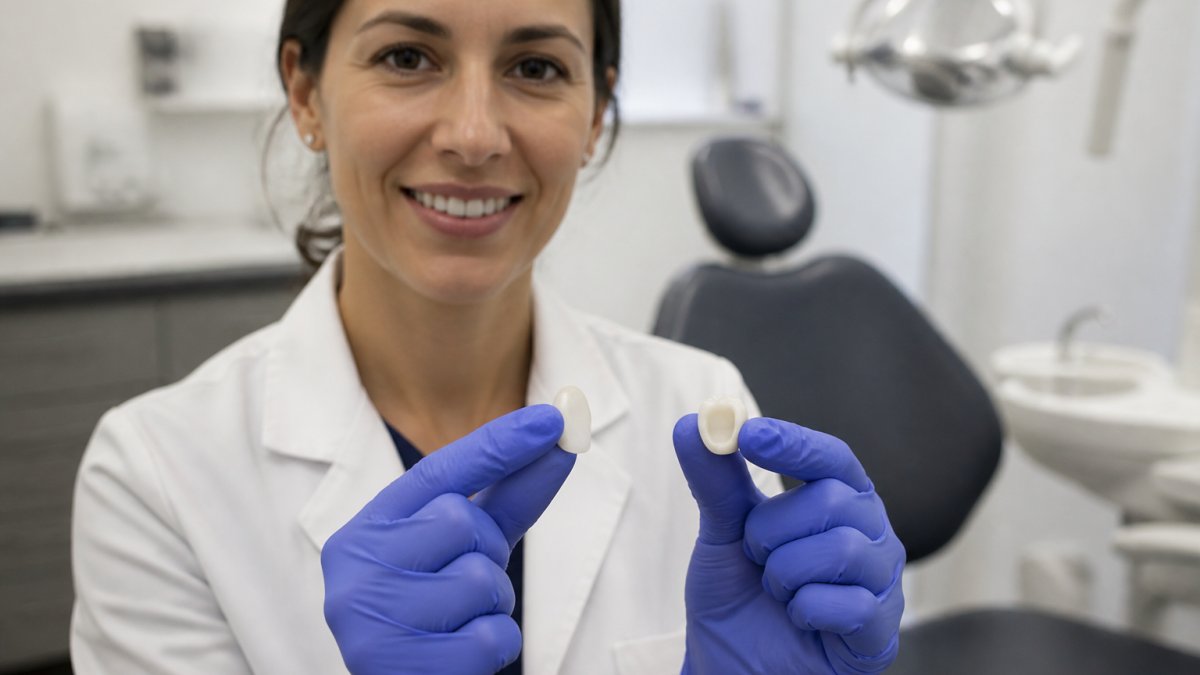
The difference comes down to how much tooth structure each option replaces. According to the American Dental Association's guidance on crowns and veneers, the choice hinges on how much healthy tooth remains and whether the goal is cosmetic or structural.
What a Veneer Covers and What a Crown Covers
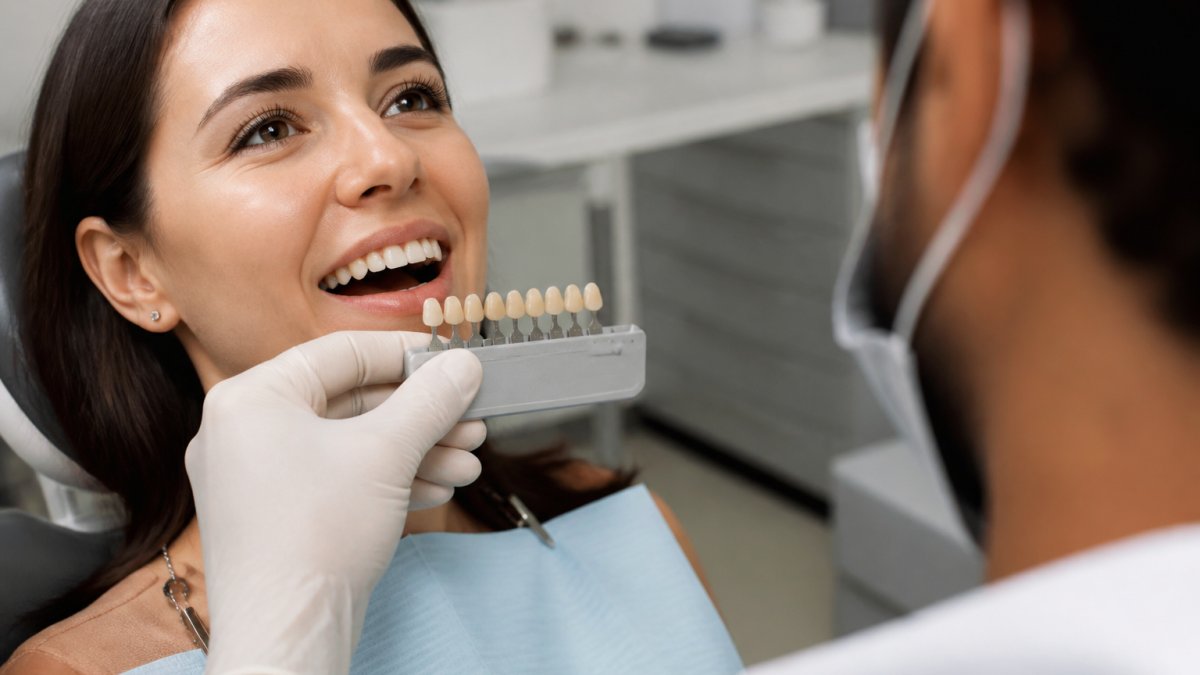
A porcelain veneer covers only the front surface of a tooth, typically about 0.3 to 0.5 millimeters of custom-made ceramic bonded to the enamel. It changes the color, shape, and length of a tooth without wrapping around the back.
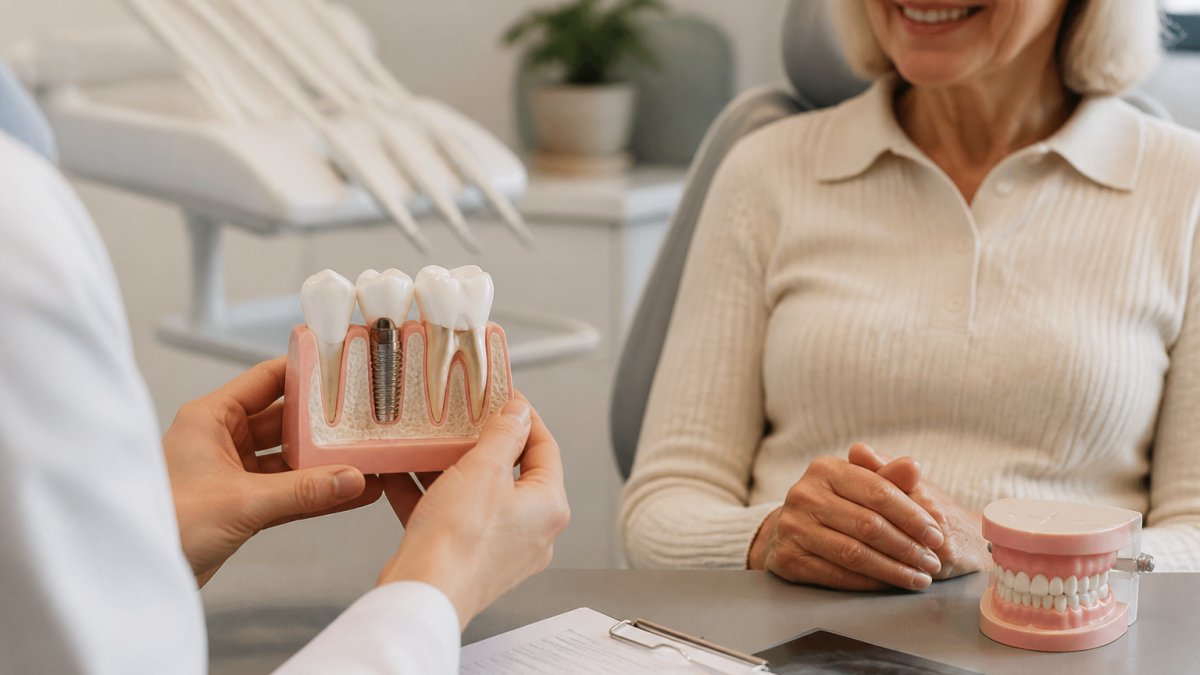
A dental crown covers the entire tooth, from the gumline to the chewing surface. Crowns restore strength to a weakened tooth after a large filling, root canal, or fracture.
That coverage gap drives everything else: tooth preparation, cost, longevity, and how much natural tooth structure you keep.
Veneers vs Crowns for Chipped Teeth
For a small chip on a front tooth, a veneer is usually the more conservative fix. For a chip that compromises the biting edge or extends deep into the tooth, a crown often protects better. The deciding factor is how much tooth structure the chip took with it.
Veneers vs crowns for chipped teeth is a judgment call your dentist makes after examining the damage. A minor chip on otherwise healthy enamel suits a veneer well. A cracked tooth, a large filling that has failed, or a chip near the gumline points toward a crown. Watch out: bonding a veneer over a tooth with hidden cracks can lead to fracture later, which is why a full exam comes before any treatment plan.
Dental Crown vs Veneer for Front Teeth
Front teeth present a real trade-off. Veneers win on appearance and enamel preservation; crowns win on strength when the tooth is already compromised.
For a front tooth with discoloration, minor spacing, or a small chip, porcelain veneers deliver a natural appearance with minimal enamel removal. For a front tooth that has had a root canal or a large filling, a crown provides protection a veneer cannot.
- Choose a veneer when the tooth is healthy and the goal is cosmetic.
- Choose a crown when the tooth is weakened, cracked, or heavily restored.
- Consider both when one tooth needs strength and its neighbors need cosmetic work.
If you are still weighing the full range of options, our guide on the best way to fix chipped teeth walks through every repair path before you commit.
Porcelain Veneers vs Crowns Cost: What Drives the Price
Porcelain veneers vs crowns cost differs because each involves different lab work, materials, and chair time. Pricing depends on the number of teeth, the lab, and the complexity of your case. The factors that move the number can help explain why the same two restorations can land at very different totals from one patient to the next.
The cost stack behind each restoration
Every restoration price is built from the same four buckets, weighted differently:
- Laboratory fee. A veneer is a thin, layered ceramic shell; a crown is a full-contour cap. Both are custom-made, but a crown typically uses more ceramic and more lab steps, which is one reason crown lab fees often run higher per unit.
- Chair time. Veneers usually require one preparation visit and one bonding visit. Crowns often need a preparation visit, a temporary crown, and a separate seat visit, plus extra time when a buildup or core is required.
- Tooth preparation and adjunct treatment. A crown on a heavily restored or root-canal-treated tooth may require a core buildup, post, or additional endodontic work. Those add-ons can push a crown's total well above a veneer's, even when the crown itself is priced similarly.
- Diagnostics and planning. Digital scans, imaging, and, for multi-tooth veneer cases, a diagnostic wax-up or trial smile add to the plan. These are usually quoted separately.
Why veneers often price lower per tooth
Veneers typically cost less per tooth than crowns because they use less material and require less tooth reduction. That per-tooth gap is real, but it narrows or reverses when:
- The case is a full smile makeover across eight to ten front teeth, where veneer lab and planning fees stack up.
- The crown is a straightforward single-unit restoration on a tooth that needs no buildup.
- The veneer case requires gum contouring, orthodontic prep, or bite adjustment first.
A common pattern is that a single veneer and a single crown on the same tooth can land in a similar range, while multi-unit cosmetic veneer cases and complex crown cases (buildup plus root canal) diverge sharply. Ask for a line-item estimate so you can see which bucket is driving your total.
Insurance: why the two are treated differently
Insurance rarely covers veneers because they are elective, cosmetic treatment. Crowns are more often partially covered as restorative care when the tooth is broken, has a large failing filling, or has had a root canal, but coverage depends on your plan's frequency limits, annual maximum, and whether the tooth meets the plan's criteria for a crown versus a filling. Even when a crown is covered, you typically pay a coinsurance percentage and any amount above the plan's allowed fee.
What to ask for in a written estimate
- Per-tooth fee for the restoration itself, separate from buildup, core, or post fees.
- Lab fee and whether a temporary is included.
- Any imaging, scan, or diagnostic wax-up charges.
- Insurance pre-estimate showing the plan's allowed amount, your coinsurance, and what falls to you.
- Replacement policy if the restoration chips or fails within a stated window.
For current pricing, see the transparent treatment pricing page.
How Long Do Porcelain Veneers Last Compared With Crowns
How long do porcelain veneers last? With good oral hygiene and regular checkups, many patients keep porcelain veneers for 10 to 15 years, and some last longer. Crowns often last 10 to 15 years as well, sometimes longer when the underlying tooth stays healthy.
Longevity depends on the same factors for both: bite forces, grinding, brushing and flossing habits, and the health of the tooth underneath. Patients who grind their teeth at night wear both restorations faster, so a night guard is often part of the plan. Chipping and fracture are the most common reasons either restoration gets replaced.
Risks, Enamel Removal, and What Happens If a Restoration Fails
Enamel removal is permanent, and that is the single biggest difference in reversibility. A veneer requires removing a thin layer of enamel from the front surface, while a crown requires reducing the tooth on all sides. Neither grows back. That one fact shapes every risk below, because once tooth structure is gone, every future treatment starts from a smaller foundation.
Enamel removal: what actually changes
- Veneers typically remove a thin layer from the facial surface only. The back and biting edge stay largely intact, which is why a veneer is often described as the more conservative option for a healthy front tooth.
- Crowns reduce the tooth circumferentially so the cap can seat without bulk. More tooth structure is lost, and the tooth becomes permanently dependent on a restoration for full coverage.
Neither preparation is reversible. If a veneer later fails, the tooth still needs a restoration, often a new veneer or a crown. If a crown fails, the tooth may need a new crown, a root canal, or, in the worst case, extraction. This is why the initial decision deserves a full exam and imaging rather than a cosmetic-only assessment.
Common risks for both restorations
- Post-treatment sensitivity. Temporary sensitivity to hot and cold is common after preparation and usually settles. Persistent sensitivity can signal margin leakage, bite interference, or pulpal inflammation and should be evaluated.
- Chipping and fracture. Ceramic is strong but brittle. Chipping is more common on thin veneer edges and on crowns in heavy bite areas. Night grinding and clenching are major contributors.
- Margin failure and decay. The seam where restoration meets tooth is the weak point. Plaque collects there, and recurrent decay under a margin is one of the most common reasons either restoration is replaced.
- Debonding. A veneer can loosen if bonding is compromised by moisture, bite load, or trauma. A crown can loosen if the cement seal fails.
- Bite and speech adjustment. New contours can feel bulky or alter speech temporarily. Most patients adapt within days to weeks; persistent bite discomfort should be adjusted, not ignored.
What happens when a restoration fails
A failed veneer can sometimes be replaced; a failed crown may expose a tooth that needs a root canal or extraction. The downstream path depends on how much tooth remains:
- Veneer failure with healthy tooth underneath: often replaceable with a new veneer or, if more structure is lost, a crown.
- Veneer failure with recurrent decay or fracture into the tooth: may require a crown or, if the pulp is involved, root canal therapy first.
- Crown failure at the margin: frequently means replacing the crown and treating any decay found underneath.
- Crown failure with root fracture: may require extraction and replacement with an implant or bridge.
Good oral hygiene and regular exams catch problems early. If you notice a rough margin, a loose feeling, or new sensitivity, book an evaluation rather than waiting for pain.
Which Option Is Right for You? A Decision Framework
Use this framework to prepare for your consultation, not to replace it.
| Your Situation | Likely Fit | Why |
|---|---|---|
| Healthy front tooth, cosmetic goal | Porcelain veneer | Preserves most enamel |
| Large filling or root canal | Dental crown | Full protection |
| Small chip, healthy enamel | Veneer | Minimal removal |
| Cracked or severely damaged tooth | Crown | Structural support |
| Multiple front teeth, uneven shape | Veneers | Consistent smile makeover |
| Weakened tooth, cosmetic concern | Crown | Strength plus appearance |
A dentist recommendation should follow a full exam and imaging. Bring your goals and your questions, and expect a plan that explains the trade-offs.
Book a Consultation to Confirm Your Restoration Plan
Choosing between porcelain veneers and dental crowns is a decision about how much tooth structure you keep, how long the restoration lasts, and what your insurance will cover. At Smiles of San Marcos, we prioritize straightforward treatment plans, transparent pricing, modern dental technology, and a judgment-free environment.
Frequently Asked Questions
Can a tooth still decay under a crown or veneer?
Ask a dentist about the possibility of decay around a crown or veneer and what signs should prompt an evaluation.
Which lasts longer, porcelain veneers or dental crowns?
The lifespan of either restoration depends on individual circumstances. Ask a dentist to discuss the factors relevant to your teeth.
Are veneers or crowns better for a chipped front tooth?
The appropriate option depends on an examination of the tooth. A dentist can assess it and discuss possible treatments.
How much do porcelain veneers and dental crowns cost?
Costs vary. For current pricing, see the practice website.
Ready to settle the veneer-versus-crown question for your own smile? Get started with Smiles of San Marcos and book a consultation to confirm your restoration plan.