 how-to
How to Schedule a Restorative Dental Exam in 2026
Last Updated: November 1, 2026
Quick Summary
To schedule a restorative dental exam, match the visit type to your problem, gather your ID, insurance card, medication list and past records, then call or book online. Problem-focused and consultation visits usually need a phone call so enough time is blocked. Ask about imaging, appointment length and cost up front.
- Routine exams with cleaning usually run 30 to 60 minutes and suit patients with no specific complaint.
- Problem-focused exams usually take 30 to 45 minutes and often include a single X-ray.
- Restorative consultations usually run 45 to 90 minutes and almost always include imaging and a written treatment plan.
- Ask whether the exam fee is separate from imaging and whether your plan requires pre-authorization.
- Request records and X-rays from your previous office before your visit to reduce repeat imaging.
Table of Contents
- Why a Restorative Dental Exam Matters in 2026
- How to Schedule a Restorative Dental Exam
- What to Expect at a Restorative Dentistry Exam
- Preparing for Your Restorative Dentistry Consultation
- Questions to Ask a Restorative Dentist
- Building Your Restorative Dentistry Treatment Plan
- Make an Appointment at Smiles of San Marcos
- Frequently Asked Questions
Why a Restorative Dental Exam Matters in 2026
A restorative dental exam is a focused evaluation of damaged, worn, or missing teeth and the structures that support them. It looks past routine cleaning and checks how well your bite, gums, and existing dental work are holding up.
So why does timing matter now? Dental care generally emphasizes earlier, less invasive treatment. A small crack caught this year may need a simple filling. The same crack left alone for two years can mean a crown, a root canal, or an extraction.
Restorative dentistry sits at the intersection of function and repair. It covers fillings, crowns, bridges, implants, and dentures, plus the diagnosis that decides which one you need. Operative dentistry handles the direct repairs, while oral medicine and oral diagnosis look at the broader health picture behind the damage.
A few things a restorative exam can catch before they get expensive:
- A failing old filling with decay creeping underneath
- A cracked tooth that has not started hurting yet
- Gum recession exposing a root surface
- A bite that has shifted after a missing tooth
- Clenching damage that is wearing teeth flat
Many people wait for pain before booking a visit. Pain is often the last symptom to appear, not the first, which is why a restorative exam can help you get ahead of problems.
How to Schedule a Restorative Dental Exam
Scheduling a restorative dental exam takes about ten minutes if you have your information ready. The steps below work whether you are a new patient or returning after years away, and they are built around the one thing most scheduling advice skips: matching the appointment type to the problem so you do not leave with the wrong visit.
Step 1: Match the visit to the problem. Restorative offices typically book three different appointment types, and they are not interchangeable:
- Routine exam with cleaning. Best when you have no specific complaint and just want a check. Usually 30 to 60 minutes.
- Problem-focused exam. For one tooth or one area, a chip, a loose crown, a sensitive spot. Usually 30 to 45 minutes and often includes a single X-ray.
- Restorative consultation. For implant, crown, bridge, or full-mouth planning. Usually 45 to 90 minutes and almost always includes imaging and a written treatment plan.
If you book a cleaning when you actually have a broken or painful tooth, the visit gets scheduled for the wrong length and you may leave without the treatment you came for.
Step 2: Gather your basics. Have these ready before you call or open the booking page:
- Photo ID
- Dental insurance card, if you have one
- A list of medications and supplements
- Names and approximate dates of past dental work
- Any recent X-rays or records from a previous office
Step 3: Call or book online, and know which is faster. Online booking is convenient for routine exams, but problem-focused and consultation visits usually need a phone call so the scheduler can block enough time.
Step 4: Confirm what the visit includes. Ask three questions before you hang up:
- Does this visit include X-rays or a 3D scan, or will imaging be scheduled separately?
- How long is the appointment blocked for?
- Will I leave with a written treatment plan, or is this a diagnostic-only visit?
Step 5: Ask about cost and coverage up front. Ask for a cost estimate before you arrive.
Step 6: Block enough time and set a reminder. Restorative exams with imaging often run longer than a routine cleaning. Do not schedule one on a 30-minute lunch break.

What to Expect at a Restorative Dentistry Exam
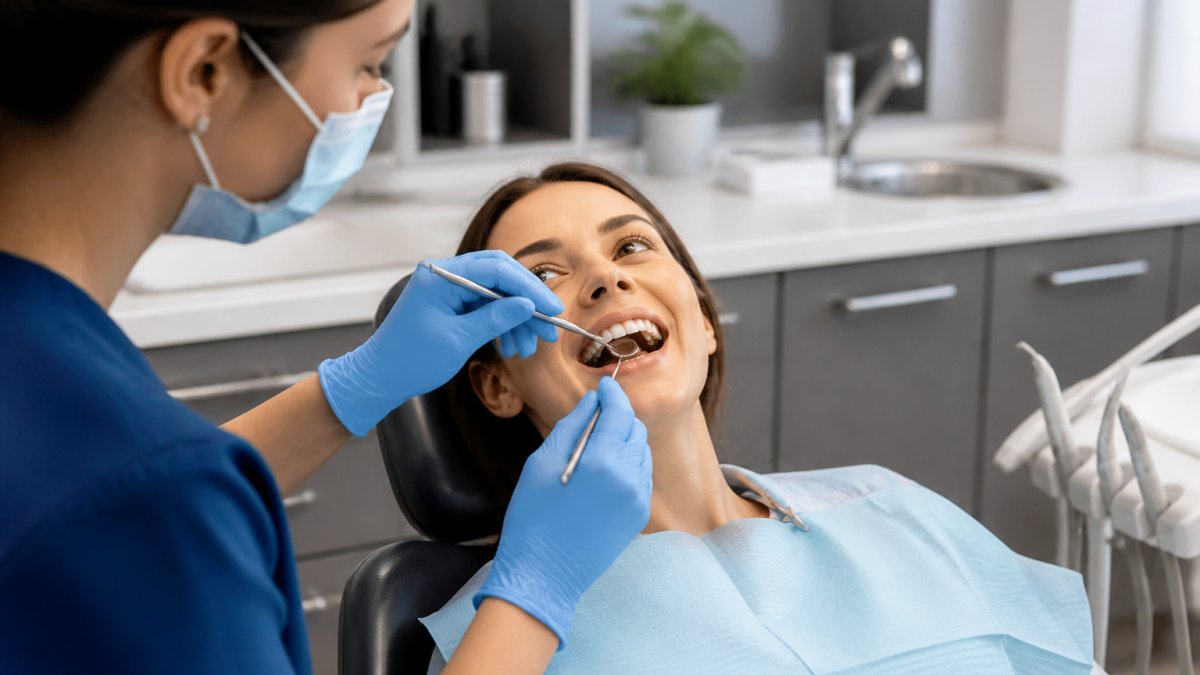
A restorative dentistry exam typically includes a health history review, a visual exam, gum measurements, imaging, and a bite check. It usually ends with a diagnosis and a treatment plan. Visit length depends on how much imaging is needed.
Here is the typical sequence:
- Health history and medications. Tell us about past dental work, surgeries, and any anxiety you have about treatment.
- Visual exam. Each tooth is checked for cracks, decay, worn edges, and failing restorations.
- Gum and bone check. Probing depths and gum health tell us whether the foundation can support a restoration.
- Imaging. X-rays or a 3D scan show what the eye cannot, including decay under old fillings and bone loss.
- Bite and jaw assessment. We check how your teeth meet and whether your jaw joint is under strain.
- Diagnosis and plan. You leave knowing what is wrong, what the options are, and what each one involves.
If you want to know what a full exam covers before you go, this walkthrough of what a comprehensive dental exam includes breaks it down step by step.
The American Dental Association's guidance on dental exams explains why regular evaluations matter for catching problems early. Oral diagnosis is often underestimated, yet it is where key treatment decisions are made.
Preparing for Your Restorative Dentistry Consultation
Preparation for a restorative dentistry consultation comes down to four things: your history, your symptoms, your questions, and your logistics. Arriving prepared can make a visit more useful, since time can go toward diagnosis and options instead of reconstructing your dental history from memory.
Build a one-page history. Write down, in plain language:
- Every medication and supplement, with doses if you know them
- Past dental work, fillings, crowns, root canals, extractions, implants, with approximate years
- Any surgeries, chronic conditions, or bleeding disorders
- Allergies, especially to metals, latex, or antibiotics
- Whether you grind, clench, or have jaw pain
Why it matters: a failing crown from 2014 and a new crown from last year point to very different diagnoses. Dates and materials change the plan.
Describe your symptoms specifically. Instead of "my tooth hurts," note:
- Which tooth, and whether the pain is sharp, dull, or throbbing
- Whether it is triggered by cold, heat, chewing, or nothing at all
- How long it lasts, seconds or hours
- Whether it wakes you up at night
- Whether the tooth has already had a filling, crown, or root canal
This detail is what separates a problem-focused exam from a full restorative workup, and it helps the office book the right appointment length.
Bring your records and coverage. Request X-rays and treatment notes from your previous office and have them sent ahead.
Write your top three questions. Keep them short and specific. Good ones include: What is the diagnosis in plain language? What happens if I wait six months? What is the total cost, and what does insurance cover?
Plan the logistics. Restorative consultations often run 45 to 90 minutes. Arrange transportation if you expect sedation, and plan for the possibility that the dentist recommends treatment the same day for an urgent problem.
Address anxiety before you arrive. If fear is why you have stayed away, say so when you book. If you want tools to use before you arrive, this guide on how to manage dental anxiety walks through practical steps.
Questions to Ask a Restorative Dentist
The best questions to ask a restorative dentist are the ones that surface cost, timeline, and alternatives before treatment starts. Ask them at the consultation, not after.
Bring this list:
- What is the diagnosis, in plain language?
- What are all my options, including doing nothing for now?
- What happens if I wait six months?
- How long will this restoration last, and what shortens that?
- What is the total cost, and what does insurance cover?
- Are there payment plans?
- Who does the work, and what is their training?
- What does recovery look like, and how much time off work?
Ask for the answer to "what is the total cost" in writing. A transparent practice will give you a treatment plan with line items. If you get a verbal ballpark and nothing else, push for the document.
Building Your Restorative Dentistry Treatment Plan
A restorative dentistry treatment plan is a written sequence of procedures, with costs and timing, built around your health goals and budget. Good plans are staged. You do not have to do everything at once.
Most plans sort treatment into three tiers:
| Priority | What It Covers | Why It Comes First |
|---|---|---|
| Urgent | Active infection, cracked tooth, pain | Stops damage and infection from spreading |
| Structural | Crowns, bridges, implants | Restores chewing and protects remaining teeth |
| Elective | Whitening, veneers, reshaping | Improves appearance once health is stable |
Ask where each item on your plan falls. If a dentist cannot tell you why something is urgent versus elective, ask again.
Cost is the part patients worry about most, and rightly so. Restorative work varies widely in price depending on the material, the number of teeth involved, and whether a specialist is needed. Ask for a full breakdown before you commit. This dental implant cost breakdown shows how implant pricing is typically structured. If you are weighing lower-cost implant options, this look at whether affordable dental implants are worth it covers the trade-offs honestly.
The National Institute of Dental and Craniofacial Research publishes patient information on tooth restoration and oral health that is worth reading before a big decision.
Make an Appointment at Smiles of San Marcos
Booking a restorative exam early is the cheapest dentistry you will ever do. Small problems stay small when they are caught in time.
At Smiles of San Marcos, we focus on restorative and cosmetic dentistry, including dental implants and veneers. Dr. Carlos Sibaja D.D.S. and Associates provide care in a judgment-free environment with modern dental technology. Pricing details are available on the Smiles of San Marcos pricing page, and you can request a quote for your treatment plan. If you have been putting off care because of past experiences or worry about the bill, you can raise those concerns when you book.
Get started with Smiles of San Marcos and book a restorative dental exam. Call our office or request an appointment online.
Frequently Asked Questions
How do I schedule a restorative dental exam?
Call the dental office or use their online booking tool. Have your insurance information and preferred dates ready. Smiles of San Marcos offers transparent pricing and a judgment-free environment. Be clear about your symptoms or concerns so they can allocate enough time for a comprehensive restorative dental exam.
What should I bring to a dental exam?
Bring a photo ID, your dental insurance card, a list of medications, and any recent X-rays or records from a previous dentist. Also jot down questions you want to ask. This helps the dentist understand your health history and create an accurate restorative dentistry treatment plan.
Will a restorative dental exam include X-rays?
Yes, X-rays are typically part of a restorative dental exam to check for decay, bone loss, and infection not visible to the eye. The type and number depend on your needs. The dentist will explain why they are needed and discuss any concerns.
How long does a restorative dental exam take?
A restorative dental exam length depends on the complexity of your situation and whether X-rays are taken. The dentist will review your medical history, examine your teeth and gums, and discuss findings. Plan for extra time if you have many questions or need a detailed treatment plan.