 How-to
The Dental Implant Process and Timeline, Step by Step
Last Updated: November 8, 2026
Quick Summary
The dental implant process moves through four stages: consultation and imaging, any prep work such as extraction or bone grafting, implant placement surgery, and finally the abutment and crown. Total timing varies widely from patient to patient, and grafting can extend it considerably.
- Grafting can add several months before implant placement, depending on the size of the defect and graft type.
- Socket preservation typically adds 2 to 4 months before the implant is placed.
- Osseointegration is the three-to-six-month bone fusion that happens quietly underneath.
- Initial healing covers the first one to two weeks, with swelling and mild soreness expected.
- Pain that gets worse after day three instead of better is a reason to call your dental team.
Table of Contents
- What Are the 4 Stages of Dental Implants
- Consultation, Imaging, and Your Treatment Plan
- Tooth Extraction and Implant Timeline: Same-Day vs. Staged Placement
- Dental Implant Timeline With Bone Graft: When Grafting Adds Months
- Implant Placement Surgery and Initial Healing
- Osseointegration and Abutment Placement: The Waiting Phase
- Tooth Implant Side Effects, Recovery, and Warning Signs
- Book a Consultation to Map Your Implant Timeline
- Frequently Asked Questions
What Are the 4 Stages of Dental Implants
The dental implant process and timeline moves through four stages: consultation and imaging, any prep work such as extraction or bone grafting, implant placement surgery, and finally the abutment and crown. Total timing varies widely from patient to patient, and grafting can extend it considerably.
Here is the short version of the four stages:
- Consultation and imaging to check bone density and plan treatment
- Prep work such as tooth extraction or bone grafting, if needed
- Implant placement surgery to set the post in the jawbone
- Abutment and final crown once the bone has fused to the implant
The rest of this guide from Smiles of San Marcos breaks down each stage, how long it takes, and what can slow it down. We also cover recovery, temporary teeth, and warning signs to watch for.
If you want to see what each stage costs before you commit, our dental implant cost breakdown walks through the numbers stage by stage.
Consultation, Imaging, and Your Treatment Plan
Your first visit is where the timeline gets personal. The dentist reviews your health history, takes dental imaging, and checks jawbone density. That evaluation decides whether you qualify for a single implant now or need prep work first.
Expect these steps at the consultation:
- A full exam and review of missing or damaged teeth
- Dental imaging, often a cone beam scan, to map bone volume
- A talk about health factors that affect healing, like smoking or diabetes
- A written treatment plan with staged dates and costs
Imaging is an important part of planning, since it helps the dentist map bone volume before treatment begins. If you are ready to start, here is how to schedule a restorative dental exam so the first visit goes smoothly.
Tooth Extraction and Implant Timeline: Same-Day vs. Staged Placement
Tooth extraction and implant timeline questions come down to one choice: place the implant the same day the tooth comes out, or wait. Same-day placement is only an option when the socket is clean and bone is adequate, as judged by the dentist.
Staged placement is a common approach, in which the socket heals for a few months before the implant is placed. Whether it is appropriate depends on the individual case.
| Approach | When It Fits | Typical Added Wait |
|---|---|---|
| Same-day placement | Healthy socket, good bone, no infection | None |
| Staged placement | Infection, thin bone, or a large extraction | Several months of socket healing |
The right approach is decided case by case based on imaging and the dentist's evaluation.
Dental Implant Timeline With Bone Graft: When Grafting Adds Months
A dental implant timeline with bone graft is longer because the graft must turn into solid bone before the implant can be placed. Grafting can add several months before implant placement, and the added time varies with the size of the defect and the type of graft.
Grafting is common, not a sign something went wrong. Thin or short jawbone cannot hold an implant securely. The graft builds that foundation back up. The timeline depends on the type of graft and the size of the defect:
| Graft Type | Typical Added Wait Before Implant | What It Involves |
|---|---|---|
| Socket preservation | 2 to 4 months | Graft material placed in the socket right after extraction to keep bone volume |
| Minor ridge augmentation | 3 to 4 months | Small amount of graft material added to a thin ridge |
| Major ridge augmentation | 4 to 6 months, sometimes longer | Larger block or particulate graft to rebuild significant bone loss |
| Sinus lift (upper jaw) | 4 to 9 months | Graft added below the sinus floor to create height for an implant |
Healing timelines vary from patient to patient. Your dentist confirms healing with imaging before moving to the next stage.
What the graft stage involves. The graft needs time to be replaced by your own bone, and that process cannot be rushed. Your dentist can explain what to expect for your specific procedure and recovery.
Typical appointment sequence. A grafting path often involves steps such as:
- Consultation and cone beam imaging to measure the defect
- Graft placement (one visit, often combined with extraction)
Ask your dentist at the consultation how many visits the graft stage will require and whether any of them can be combined.
What can affect graft healing. Smoking and uncontrolled blood sugar can slow healing. If either applies to you, raise it at the consultation so the plan can account for it. Other avoidable delays include:
- Missing the healing check, which lets a small problem go unnoticed
- Chewing hard foods over the graft site too early
- Skipping prescribed antibiotics or rinses
- Grinding or clenching without a protective guard
A graft that feels fine may still need time to heal. Your dentist uses imaging to determine readiness.
Cost and insurance implications. Grafting is a separate procedure with its own fee, and it is often not covered the same way as the implant itself. If the added months and cost have you weighing your options, see whether affordable dental implants are worth it. Our comparison of dentures versus implants lays out the real cost and time trade-offs side by side.
Added wait before implant by graft type
Implant Placement Surgery and Initial Healing
Implant placement is typically a short procedure for a single implant. The dentist numbs the site, makes a small opening in the gum, and sets the titanium post into the jawbone. Recovery time varies, and your dentist can advise you on what to expect.
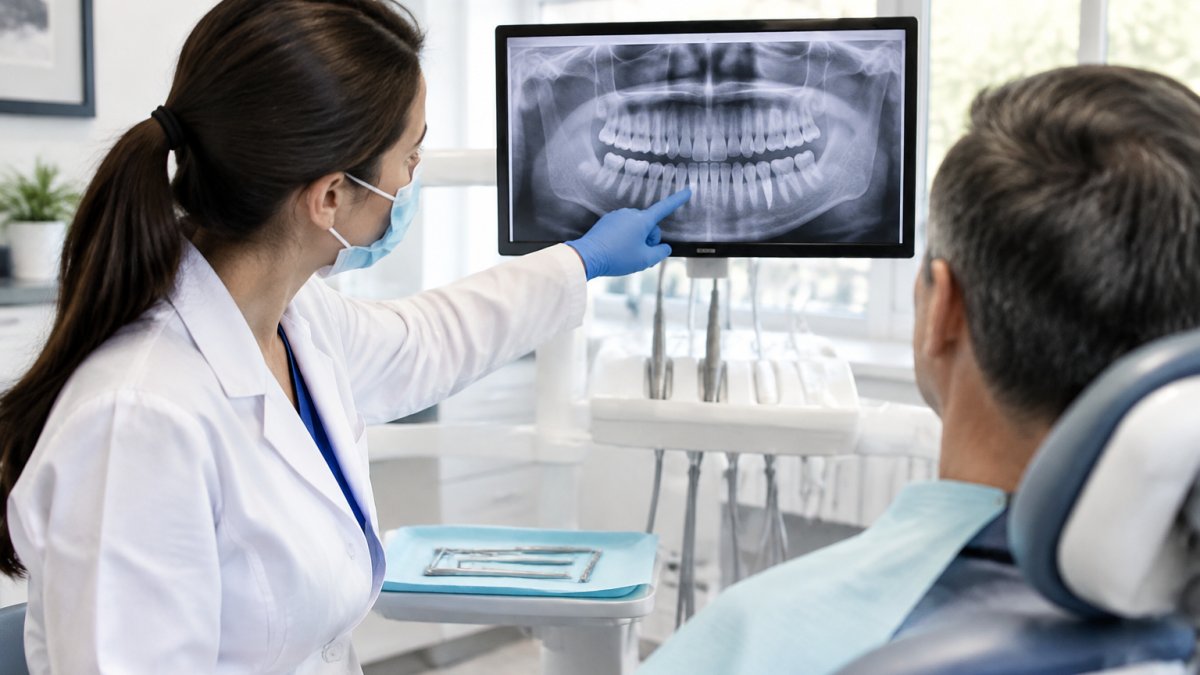
Initial healing covers the first one to two weeks. Expect some swelling and mild soreness. Cold compresses and any prescribed medication help. Soft foods and gentle brushing around the site protect the surgical area.
If dental anxiety has kept you from treatment, tell the team early. Our step-by-step guide on managing dental anxiety covers practical ways to make surgery and recovery calmer.
Osseointegration and Abutment Placement: The Waiting Phase
Osseointegration is the process where jawbone grows into and fuses with the implant surface (Osseointegration: An Update). This bone fusion is what makes an implant stable enough to hold a crown.
The waiting phase is where most timeline questions actually live, so it helps to separate three things that are easy to blur together:
- Surgical recovery, the first one to two weeks, when swelling and soreness fade
- Osseointegration, the three-to-six-month bone fusion that happens quietly underneath
- Restoration, the abutment and crown that come after fusion is confirmed
Feeling back to normal is not the same as being finished. You may feel fine within a week while the bone is still fusing for months. Plan around the full treatment duration, not just how you feel.
Temporary teeth during the waiting period. Whether you can have a temporary tooth depends on your situation:
- Single implant in a visible area, many dentists provide a removable partial denture, a flipper, or a temporary crown attached to a neighboring tooth so you are not left with a gap.
- Single implant in a back tooth, a temporary is often optional, since the gap is less visible.
- Multiple implants or a full arch, a temporary denture or a provisional bridge is common, and some cases allow a temporary restoration attached to the implants themselves.
- Same-day placement with immediate loading, a temporary crown may be placed the same day, but only when the implant is stable enough; this is a clinical decision, not a patient preference.
Ask at the consultation what your temporary option will be, who makes it, and whether it is included in the quoted fee. Ask whether temporary restorations are a separate charge.
Typical appointment sequence. An osseointegration and abutment path often involves steps such as:
- Implant placement surgery (one visit, often under an hour for a single implant)
Ask how many visits the waiting phase will require and whether any can be combined.
What can delay osseointegration and how to reduce the risk. Several factors can slow healing and fusion:
- Smoking restricts blood flow to the healing site (pubmed.ncbi.nlm.nih.gov)
- Uncontrolled diabetes affects the body's ability to build bone around the implant
- Infection or poor oral hygiene around the site
- Skipping follow-up appointments
- Biting or chewing hard foods on the implant before it is cleared
Watch out: an implant that feels loose, or pain that gets worse after the first week instead of better, is a reason to call your dental team promptly rather than wait for the next scheduled visit.
Cost and insurance implications of the staged wait. The waiting phase is not a single bill. Abutment placement, temporary restorations, and imaging checks are often separate charges, and some plans cover the crown differently from the implant itself.
Tooth Implant Side Effects, Recovery, and Warning Signs
Tooth implant side effects are often mild and short-lived. Common ones include swelling, bruising, and minor bleeding. Over-the-counter pain relief and rest may help.
Recovery and complete treatment are not the same thing. You may feel fine within a week while the bone is still fusing for months. Plan around the full treatment duration, not just how you feel.
Contact your dental team promptly if you notice:
- Pain that gets worse after day three instead of better
- Fever or chills
- Pus, or a bad taste that will not clear
- An implant that feels loose
These signs can point to infection or a problem with healing, so contacting your dental team is important.
Book a Consultation to Map Your Implant Timeline
Every timeline is an average. Your dental implant process depends on your bone, your health, and how your body heals. The only way to get real dates is an exam and imaging with a dentist.
At Smiles of San Marcos, we aim to provide clear treatment plans in a welcoming, judgment-free environment. Dr. Carlos Sibaja D.D.S. and Associates provide restorative and cosmetic dentistry, including dental implants and veneers.
Contact Smiles of San Marcos to schedule a consultation and discuss your treatment plan.
A long implant timeline can feel daunting, especially when you are weighing it against dentures or a bridge. A short consultation removes the guesswork and gives you a plan built around your mouth, not a generic estimate. Smiles of San Marcos offers transparent pricing, modern imaging technology, and a judgment-free setting where you can ask anything. Make an appointment and get your timeline mapped out.
Frequently Asked Questions
How long does the dental implant process take from start to finish?
Total timelines vary widely. If a tooth must be extracted first, socket healing adds time, and a bone graft can extend the timeline considerably because the graft needs time to consolidate before the implant is placed. Your own timeline depends on bone density and how quickly you heal.
What is the most painful part of getting dental implants?
Soreness is commonly reported after implant surgery, once the local anesthetic wears off. Expect mild swelling, tenderness at the surgical site, and possibly minor bruising. Over-the-counter pain relievers usually manage it. Abutment placement and crown fitting are typically less uncomfortable than the initial surgery. Tooth implant side effects beyond this window, such as fever or pain that worsens after day three, should be reported to your dental team.
How many days should I rest after a dental implant?
Plan to take it easy after implant placement, and follow your dentist's specific post-operative instructions regarding activity, diet, and smoking. If your work is physically demanding, ask your dentist how many days off you need based on the number of implants placed.
Can a tooth be extracted and an implant placed on the same day?
Sometimes, yes. Same-day placement works when the socket is intact, there is no active infection, and bone density is adequate. In many cases the dentist prefers to let the extraction site heal for a few weeks or months first, especially if grafting is needed. The tooth extraction and implant timeline is decided case by case after imaging and an initial evaluation, so ask during your consultation which approach fits your situation.