 How-to
What to Expect During a Veneer Consultation
Last Updated: November 17, 2026
Quick Summary
A veneer consultation is a diagnostic appointment where a dentist reviews your oral health, discusses your smile goals, and decides whether thin porcelain or resin shells are right for you. You will talk, get examined, and leave with a plan. The visit covers an intraoral examination, aesthetic goal discussion, and candidacy checks on gum health, bruxism, and enamel.
- Bring written smile goals, medication list, prior dental records, reference photos, and your budget range.
- Candidacy rests on gum health, bruxism, and enamel; active gum disease needs treatment first.
- Porcelain veneers usually need two or more visits, while composite resin is typically done in one.
- The full porcelain timeline usually runs two to four weeks, including one to two weeks of lab fabrication.
- Ask for a written, itemized estimate and a pre-treatment insurance estimate before treatment starts.
Table of Contents
- What Happens During a Veneer Consultation
- How to Prepare for a Veneer Consultation
- Determining Candidacy: Gum Health, Bruxism, and Enamel
- Porcelain vs. Composite Resin: Choosing Your Veneer Material
- Questions to Ask During a Veneer Consultation
- The Veneer Treatment Timeline From Consultation to Bonding
- Understanding Cost and Financial Planning for Veneers
- Booking Your Veneer Consultation
- Frequently Asked Questions
What Happens During a Veneer Consultation
A veneer consultation is a diagnostic appointment where a dentist reviews your oral health, discusses your smile goals, and decides whether thin porcelain or resin shells are right for you. At Smiles of San Marcos, we aim to start every veneer consultation by listening first. No lectures, no pressure.
Here is the short answer: you will talk, get examined, and leave with a plan.
Below, we break down each stage so you know exactly what to expect.
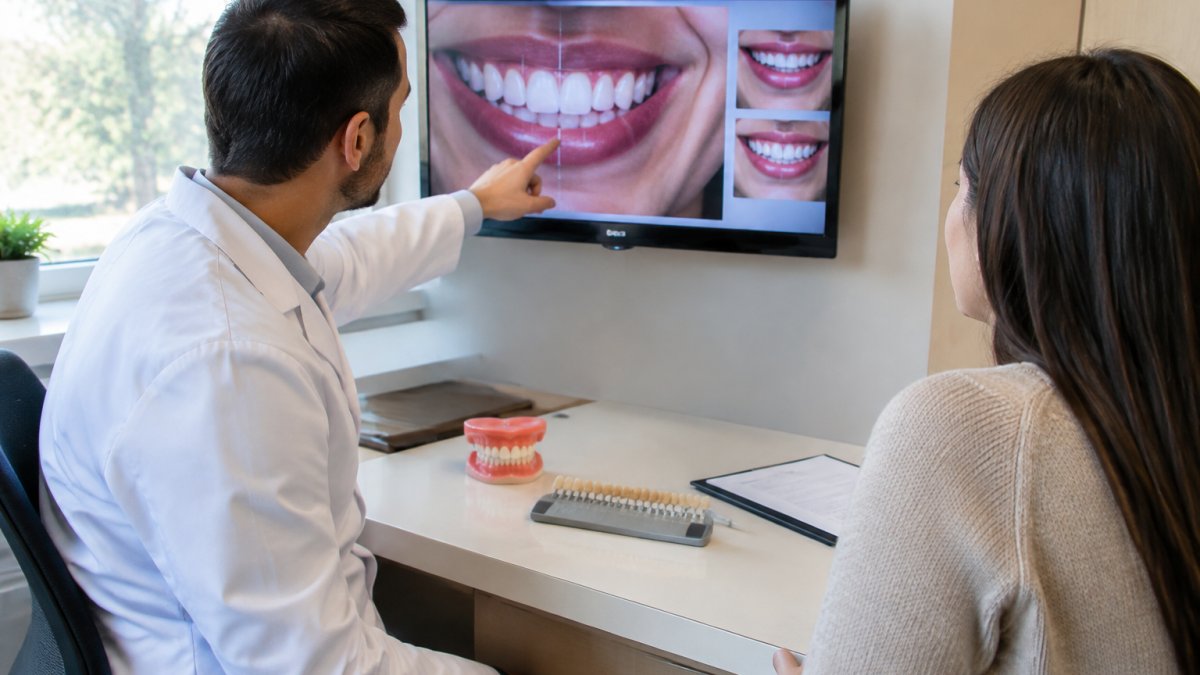
The Oral Health Assessment and Intraoral Examination
First comes the clinical evaluation. Your dentist performs an intraoral examination and checks your dental history, gum condition, and existing restorations.
This stage matters because veneers bond to enamel. Weak gums or untreated decay can undermine the result. The American Dental Association's guidance on cosmetic dentistry explains why a healthy foundation comes first.
Discussing Your Aesthetic Goals and Smile Design
Next, your dentist asks what you actually want to change. Be specific. Bring photos if you have them.
You will cover:
- Tooth shape, length, and proportion
- Shade selection under proper lighting
- Symmetry and how your smile line sits
- Whether you want a subtle refresh or a fuller smile makeover
How to Prepare for a Veneer Consultation
Preparation is simple, and it makes the visit far more useful. Do these five things before you arrive:
- Write down your smile goals in plain words.
- List every medication and supplement you take.
- Gather records from any previous dentist.
- Bring reference photos of smiles you like.
- Note your budget range and whether you want financing options.
If you grind your teeth at night, mention it early. Bruxism changes the treatment plan.
Dental anxiety deserves its own line here. Tell the front desk when you book. A judgment-free approach means your pace and comfort matter, and you can ask questions at any step. If nerves are a real barrier, learn how to manage dental anxiety step by step before your appointment.
Determining Candidacy: Gum Health, Bruxism, and Enamel
Not everyone is a candidate for veneers, and an honest dentist will say so. Candidacy rests on three factors.
Gum health. Active gum disease needs treatment first. Inflamed tissue will not support a stable, long-lasting restoration.
Bruxism. Heavy clenching puts stress on any bonded restoration. Your dentist may recommend a night guard or discuss a different option.
Enamel. Porcelain veneers require a small amount of enamel removal. If enamel is thin or heavily worn, composite bonding may be the more minimally invasive route.
Other considerations include bite alignment, existing large fillings, and tooth decay. If your main concern is a damaged tooth rather than shape or color, see the full range of ways to fix a chipped tooth before deciding on veneers.
Porcelain vs. Composite Resin: Choosing Your Veneer Material
Two materials dominate cosmetic dentistry, and each has a clear best use.
Porcelain veneers are custom-made in a lab from a diagnostic wax-up. They resist staining well, hold a natural translucency, and typically last longer than resin. They cost more and usually need two visits.
Composite resin veneers are built directly on the tooth in one visit. Less enamel is removed, and repairs are simpler. They wear faster and can stain over time.
| Feature | Porcelain | Composite Resin |
|---|---|---|
| Visits needed | Two or more | Usually one |
| Enamel removal | Moderate | Minimal |
| Stain resistance | High | Moderate |
| Repair | Replace the shell | Add and polish |
| Best for | Long-term smile makeover | Budget-friendly, quick fix |
If you are also weighing a crown for a damaged tooth, compare porcelain veneers and dental crowns side by side before you commit.
Questions to Ask During a Veneer Consultation
Ask direct questions and expect direct answers. Use this checklist:
- How many veneer cases do you complete each month?
- Can I see before-and-after photos of similar cases?
- Will you show me a digital mock-up first?
- How much enamel will be removed?
- What happens if a veneer chips or debonds?
- Are temporary veneers included?
- What is the full cost, including labs and follow-ups?
- Does my insurance cover any part of this?
- What maintenance schedule do you recommend?
Write the answers down. A clear treatment plan should be given to you in writing, not just spoken aloud.
The Veneer Treatment Timeline From Consultation to Bonding
The full procedure timeline usually runs two to four weeks for porcelain, depending on the lab. Here is the sequence:
- Consultation and imaging (day one)
- Digital mock-up and plan approval (same visit or shortly after)
- Tooth preparation and temporaries (visit two)
- Lab fabrication (about one to two weeks)
- Bonding process and final fit (last visit)
- Follow-up check (one to two weeks later)
Some sensitivity after tooth preparation is common, and it often settles over time. Ask your dentist what to expect in your case. If you want to know how long the finished work holds up, read about how long porcelain veneers last and what maintenance supports veneer longevity.
Understanding Cost and Financial Planning for Veneers
Veneers are generally considered a cosmetic treatment, and coverage varies by plan. Check with your insurer. That makes financial planning essential, and it is the part of the consultation most patients wish they had prepared for better. The goal of this section is to give you the questions and the framework to leave the consultation with a real number, not a range.
Cost depends on several variables:
- Number of teeth treated
- Material chosen (porcelain versus composite resin)
- Lab fees
- Any preparatory work, such as gum treatment, night guards, or bite adjustment
- Whether temporaries and follow-up visits are included
Ask for a written estimate that lists every line item before treatment starts. That is how you avoid surprise fees. At Smiles of San Marcos, we prioritize transparent pricing and straightforward treatment plans. You can review current pricing on our website.
How to Ask About Payment Plans and Insurance
Most practices offer some form of financing, but they rarely lead with it. Ask these questions directly at the consultation:
- Do you offer an in-house payment plan, and if so, what are the terms and any fees?
- Do you work with third-party patient financing companies, and what credit requirements apply?
- Is there a discount for paying in full upfront?
- Which parts of the treatment, if any, might be considered medically necessary and therefore partially covered, such as treatment for decay or gum disease before veneers?
- Will you submit a pre-treatment estimate to my insurance so I can see what is covered before I commit?
A pre-treatment estimate is the single most useful document you can request. It tells you what your plan will pay and what you will owe, and it forces the practice to itemize the plan. Ask for it in writing.
Using HSA and FSA Funds
Health savings accounts and flexible spending accounts can often be used for dental treatment, but the rules depend on your plan and on whether the expense qualifies as medical care. Veneers that are purely cosmetic may not qualify, while treatment for decay, gum disease, or a damaged tooth may. Check with your plan administrator before you schedule, and keep receipts. If you have a choice, timing treatment near the end of a plan year can let you use remaining FSA funds before they expire.
Comparing Written Estimates
If you get estimates from more than one practice, compare them line by line rather than by the total. Look for whether the estimate includes:
- Lab fees
- Temporaries
- Follow-up visits and any adjustments
- Night guard if you grind
- Any preparatory treatment
A lower total that excludes temporaries or follow-ups can cost more in the end. The Consumer Financial Protection Bureau's guidance on medical billing offers useful background on understanding and questioning health care bills.
Watch out: a verbal quote with no written breakdown is not a plan. Ask for the itemized estimate before you schedule preparation, and confirm in writing what happens if additional teeth need treatment once the dentist sees the full scan.
Booking Your Veneer Consultation
Booking is the easy part. Call, or use the online scheduler, and say what you want from the visit.
Bring these to the appointment:
- Photo ID and insurance card
- A list of medications
- Previous dental records or X-rays
- Your written smile goals and reference photos
- Your budget range
Expect a confirmation, a short intake form, and a clear arrival time. If you would rather handle it online, here are seven steps to book a restorative dental consultation online.
A smile you have avoided showing for years is not a small thing, and the right consultation should feel like a plan, not a sales pitch. Smiles of San Marcos offers modern dental technology, a judgment-free environment, and transparent pricing. Our team, led by Dr. Carlos Sibaja D.D.S. and Associates, works to build straightforward treatment plans around your goals. Get started with Smiles of San Marcos and walk out of your consultation knowing exactly what comes next.
Frequently Asked Questions
How long does a veneer consultation take?
Consultation length varies. Ask when you book so you can plan your day.
Will the dentist examine my teeth and gums during the consultation?
Yes. A clinical evaluation is a core part of a veneer consultation. It helps your dentist determine whether veneers are appropriate and whether anything, such as gum disease, should be treated first.
What should I ask before committing to veneers?
Ask how many teeth will be treated and why, whether enamel removal is required, and which material (porcelain veneers or composite resin) fits your case. Ask whether a preview of the expected result is available. Also ask about veneer longevity, maintenance, post-operative sensitivity, and what the total cost covers. A transparent treatment plan in writing makes it easier to compare options without surprises.
How should I prepare for a veneer consultation?
Bring a list of medications, your dental history, and any previous X-rays if you have them. Write down your smile goals, including photos of results you like, and note any anxiety so the team can adjust. Arrive with clean teeth and a list of questions. Knowing how to prepare for a veneer consultation helps you get a realistic treatment plan on the first visit instead of needing a second appointment.